Turkish bakery classic · Soft for days
Turkish Pogaca Recipe (Soft Cheese-Filled Buns)
Cloud-soft. Salty feta. Golden glaze.
 Recipe by Farwa ZeeshanTested in the NineFoods home kitchen
Pogaca should be pillowy and soft, not bread-like. The softness comes from yoghurt and oil in the dough and from not adding too much flour. This recipe keeps the dough slightly sticky, lets it rise until doubled, and glazes the buns with egg yolk for that deep golden bakery shine.
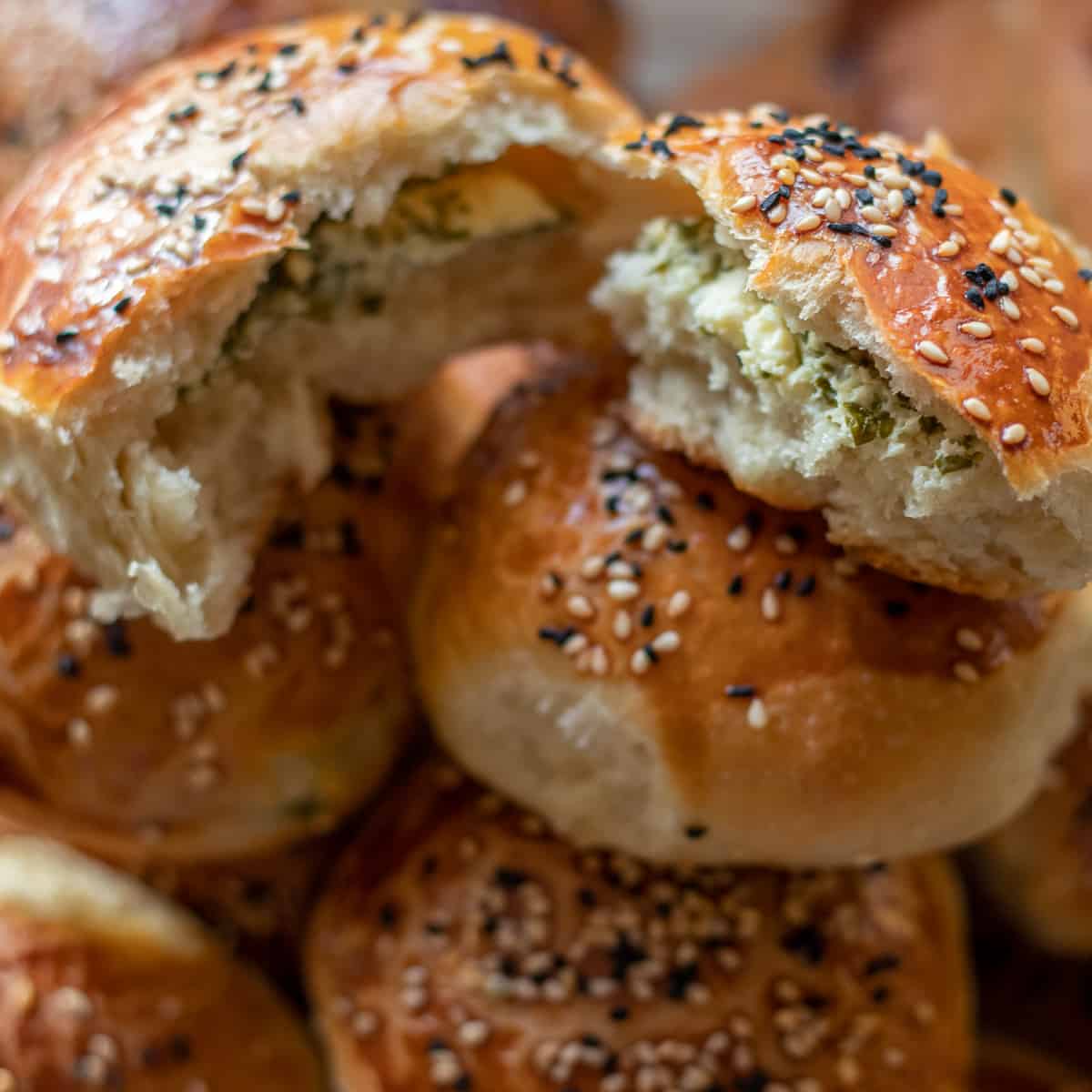
The 3 laws of pogaca
Why this recipe works
Dry, stiff dough
Keep the dough slightly sticky. Extra flour makes them bready.
Water only
Yoghurt and oil keep the crumb tender for days.
Whole egg wash
Egg yolk with milk gives the deep golden shine.
Shopping and prep list
Ingredients
Dough
Filling
Glaze
The NineFoods dough feel test
Is the dough the right texture?
Touch the dough after kneading. Tap what you feel.
Method · 4 stages
Step by step
Make the dough
- Mix milk, yeast and sugar, then yoghurt, oil, egg white and salt.
- Add flour gradually and knead until soft and slightly tacky. Use the gauge above.
Rise
- Cover and rest until doubled.
Fill and shape
- Divide into 16 balls, flatten and fill with feta and parsley.
- Fold into half moons and seal. Glaze with yolk and sprinkle seeds.
- Rest 15 minutes.
Bake
- Bake until deep golden.
- Cover with a cloth while cooling so they stay soft.
Chef's troubleshooter
What went wrong? Pick the symptom
Why
Too much flour.
Fix next time
Keep the dough slightly tacky.
Why
Yeast inactive or kitchen cold.
Fix next time
Check yeast foams in warm milk and rise in a warm spot.
Why
Edges not sealed.
Fix next time
Pinch edges firmly and keep filling away from the rim.
Why
Whole egg wash or underbaked.
Fix next time
Use yolk and milk and bake to deep gold.
Why
Cooled uncovered.
Fix next time
Cover with a cloth while cooling and store airtight.
Swap smart
Ingredient roles and substitutes
| Ingredient | Job in the dish | Swap with |
|---|---|---|
| Feta | Salty filling | White cheese, potato or spiced mince |
| Yoghurt | Soft crumb | Sour cream |
| Oil | Tender texture | Melted butter |
| Nigella seeds | Classic topping | Sesame seeds only |
| Plain flour | Structure | Half bread flour for chewier buns |
After the meal
Serve, store, reheat
Serve with
Turkish tea, olives, tomatoes and cucumber for a Turkish breakfast.
Store
Airtight at room temperature 2 days. Freezer 1 month.
Reheat
Warm at 160°C for 5 minutes.
How we tested this recipe
Tested in a home kitchen, not a studio
Recipe developed and tested by Farwa Zeeshan, who cooks and tests every NineFoods recipe on a regular home stove.
- Cooked from start to finish with the exact quantities above for 16 servings, using both the metric and US cup measures.
- Every one of the 4 stages was timed at the stove; heat levels and the 'look for' cues are what we saw in the pan.
- The doneness check (is the dough the right texture) and the troubleshooter come from batches that went wrong, and how we fixed them.
- Reheating and storage advice was checked on leftovers, not guessed.
Keep cooking
Related recipes and guides


Quick answers
Pogaca FAQ
What is pogaca?
Pogaca is a soft Turkish bun, often filled with cheese, potato or olives, eaten at breakfast or with tea.
How do I keep pogaca soft?
Use yoghurt and oil in the dough, avoid extra flour and cover the buns while they cool.
Can I freeze pogaca?
Yes. Freeze baked buns for up to 1 month and warm them in the oven.
Can I make pogaca without yeast?
Yes. Quick pogaca uses baking powder instead, but the yeast version is softer.