
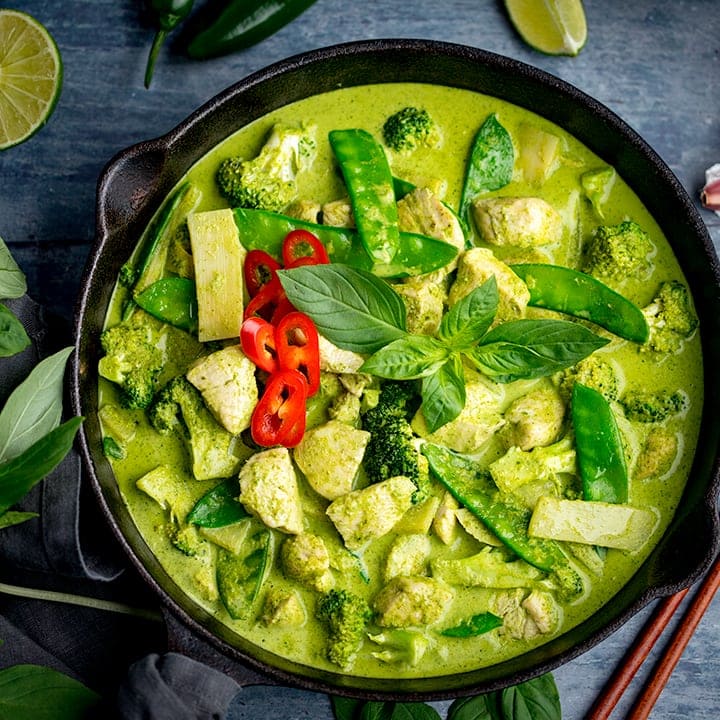
It often begins with the aroma. A beguiling, multifaceted fragrance that wafts from the kitchen—a siren’s call of exotic spices and creamy sweetness that promises something truly special. It’s a scent that speaks of bustling Bangkok markets, verdant fields of lemongrass, and a culinary tradition honed over centuries.
This is the initial, intoxicating encounter with Thai green curry, a dish that is so much more than a simple meal. It’s an experience. It’s a journey. Prepare to take a glimpse into the emerald heart of Thai cuisine.
🌿 What is Thai Green Curry?
In its homeland, this celebrated dish is known as Kaeng Khiao Wan (แกงเขียวหวาน). The name itself is a beautiful piece of poetry:
🇹🇭 Thai Name Breakdown
Kaeng (แกง) = Watery curry
Khiao (เขียว) = Green
Wan (หวาน) = Sweet
“Sweet Green Curry” — though the “sweet” refers not to sugar, but to the gentle, creamy shade of green and the subtle sweetness from rich coconut milk.
The flavor profile is a masterful tightrope walk—a quintessential balance of sweet, spicy, salty, and savory notes that dance in perfect harmony on the palate.
📜 A Journey Through Time: Origins of Green Curry
Like many of the world’s most iconic dishes, the precise genesis of green curry is shrouded in the mists of culinary history. Its story is believed to have begun in the opulent royal kitchens of Siam, sometime during the early 20th century. Here, royal chefs with access to a cornucopia of ingredients and a mandate for perfection refined and elevated existing curry traditions.
There’s also a fascinating through-line connecting it to a more ancient past—the Indian connection. The concept of using a complex paste of ground spices as a flavor base is a clear echo of Indian culinary philosophy, but the Thais took this concept and transmuted it, infusing it with their own unique palette of indigenous herbs and aromatics, creating something entirely new and distinctly Southeast Asian.
🌶️ The Soul of the Curry: Green Curry Paste
At the very core of any authentic green curry lies the paste—the Prik Kaeng Khiao Wan (พริกแกงเขียวหวาน). This is not merely an ingredient; it is the soul of the dish.
🟢 The Verdant Foundation: Green Chilies
The characteristic color and fiery spirit come from fresh green chilies, specifically varieties like prik chee faa. They provide a vibrant, sharp heat that is more herbal and less smoky than their red counterparts.
🌿 The Aromatic Symphony: Lemongrass, Galangal & Kaffir Lime
This holy trinity of Thai aromatics forms the paste’s fragrant backbone. Lemongrass lends a citrusy, floral note. Galangal, a rhizome often mistaken for ginger, contributes a pungent, peppery, almost pine-like flavor. The kaffir lime is used in two ways: the zest provides intensely fragrant citrus oil, while the leaves are added later for their unique, bright aroma.
🦐 The Umami Undercurrent: Shrimp Paste (Kapi)
Known as kapi (กะปิ), this fermented shrimp paste is a non-negotiable element. It introduces a profound, savory depth—a powerful umami undercurrent that grounds the lighter, aromatic notes and gives the curry its lingering, satisfying complexity.
🪨 Traditional Method: Mortar & Pestle
- While food processors offer a convenient shortcut, the traditional method of pounding ingredients in a heavy stone mortar and pestle is a true labor of love
- This meticulous process bruises and coaxes out essential oils and juices
- The result is infinitely more fragrant and nuanced than machine-made paste
🛒 Ingredients
For the Green Curry Paste
- 10-15 fresh green chilies
- 4 stalks lemongrass (white part only)
- 3 tablespoons galangal, sliced
- Zest of 2 kaffir limes
- 6 cloves garlic
- 4 shallots
- 1 tablespoon coriander roots
- 1 teaspoon cumin seeds, toasted
- 1 teaspoon white peppercorns
- 1 tablespoon shrimp paste (kapi)
- 1 teaspoon salt
For the Curry
- 500g chicken breast or thigh, sliced
- 400ml coconut milk
- 200ml coconut cream (thick)
- 3-4 tbsp green curry paste
- 200g Thai eggplant, quartered
- 100g bamboo shoots
- 50g pea aubergines (optional)
- 4-5 kaffir lime leaves
- 1 cup Thai basil leaves
- 2-3 tbsp fish sauce
- 1 tbsp palm sugar
- 2 red chilies, sliced (garnish)
| Component | Key Ingredients | Purpose |
|---|---|---|
| Paste Base | Chilies, Lemongrass, Galangal | Flavor foundation |
| Creamy Base | Coconut Milk & Cream | Rich, velvety texture |
| Protein | Chicken, Prawns, or Tofu | Main protein |
| Vegetables | Thai Eggplant, Bamboo | Texture & freshness |
| Seasoning | Fish Sauce, Palm Sugar | Balance of flavors |
| Aromatics | Thai Basil, Kaffir Lime | Final fragrance |
👨🍳 Step-by-Step Instructions
Part 1: Making the Curry Paste (Optional)
Skip this if using store-bought paste
Toast the Spices: Dry-toast cumin seeds and white peppercorns in a pan until fragrant. Let cool, then grind to a powder.
Pound the Paste: Using a mortar and pestle (or food processor), pound the following in order, creating a smooth paste between each addition:
- Salt and chilies first
- Lemongrass and galangal
- Kaffir lime zest and coriander roots
- Garlic and shallots
- Ground spices and shrimp paste
Part 2: Cooking the Curry
Crack the Coconut Cream: Heat coconut cream in a wok or deep pan over medium-high heat. Stir continuously until the cream “cracks”—the oil separates and pools on the surface (about 3-4 minutes). This is crucial for blooming the paste.
Bloom the Paste: Add 3-4 tablespoons of green curry paste to the cracked coconut cream. Fry vigorously for 2-3 minutes until incredibly fragrant and the oil takes on a green tinge.
Add the Protein: Add sliced chicken (or your protein of choice) to the wok. Stir-fry until the outside is sealed and well-coated with the aromatic paste, about 3 minutes.
Pour in Coconut Milk: Add the remaining coconut milk and torn kaffir lime leaves. Bring to a gentle simmer—do not boil vigorously as this can cause the coconut milk to split.
Add Vegetables: Add Thai eggplant, bamboo shoots, and pea aubergines (if using). Simmer for 10-12 minutes until the chicken is cooked through and vegetables are tender but still have some bite.
Season to Perfection: This is the art of Thai cooking. Add fish sauce for saltiness and palm sugar for sweetness. Taste and adjust—the curry should be a harmonious balance of salty, sweet, spicy, and savory.
Finish & Serve: Remove from heat. Stir in a generous handful of fresh Thai basil leaves. Ladle into bowls, garnish with sliced red chilies and extra basil. Serve immediately with steamed jasmine rice.
🥥 The Creamy Elixir: Role of Coconut Milk
If the paste is the soul, then coconut milk is the heart—the creamy elixir that binds everything together. In Thailand, cooks are discerning about their coconut milk:
| Type | Thai Name | Description | Use |
|---|---|---|---|
| Coconut Cream | Hua Gati | Thick first press | Cracking & blooming paste |
| Coconut Milk | Hang Gati | Thinner subsequent press | Creating the curry base |
This rich, luscious liquid does more than just create a velvety texture; it masterfully tames the flame of the chilies, enveloping the spice in a comforting, sweet embrace and creating a beautifully balanced and eminently palatable dish.
📊 Nutrition Information
Per serving (approximate values)
🍚 How to Serve & Enjoy
How one enjoys this masterpiece is the final part of the ritual:
🍚 Steamed Jasmine Rice
The perfect pairing, without question. Its neutral, slightly floral character is the ideal canvas for soaking up every last drop of the precious sauce.
🍜 Khanom Chin (Rice Noodles)
For a different yet equally traditional experience, serve with khanom chin—delicate, freshly made fermented rice noodles that offer a delightful textural contrast.
💡 Serving Tips
- Serve curry in shallow bowls to showcase the beautiful green color
- Always serve immediately after adding Thai basil to preserve freshness
- Offer extra fish sauce and chilies on the side for guests to adjust
- Garnish with coconut cream drizzle for restaurant-style presentation
🔄 Regional Variations & Modern Twists
While we speak of a “classic” green curry, it’s important to recognize that it is a living, breathing dish with variations across Thailand. As Thai cuisine has conquered the globe, it has also inspired countless contemporary interpretations:
| Variation | Protein | Special Notes |
|---|---|---|
| Kaeng Khiao Wan Gai | Chicken | Most classic version |
| Kaeng Khiao Wan Nuea | Beef | Tender slivers work best |
| Kaeng Khiao Wan Goong | Prawns | Add prawns at the end |
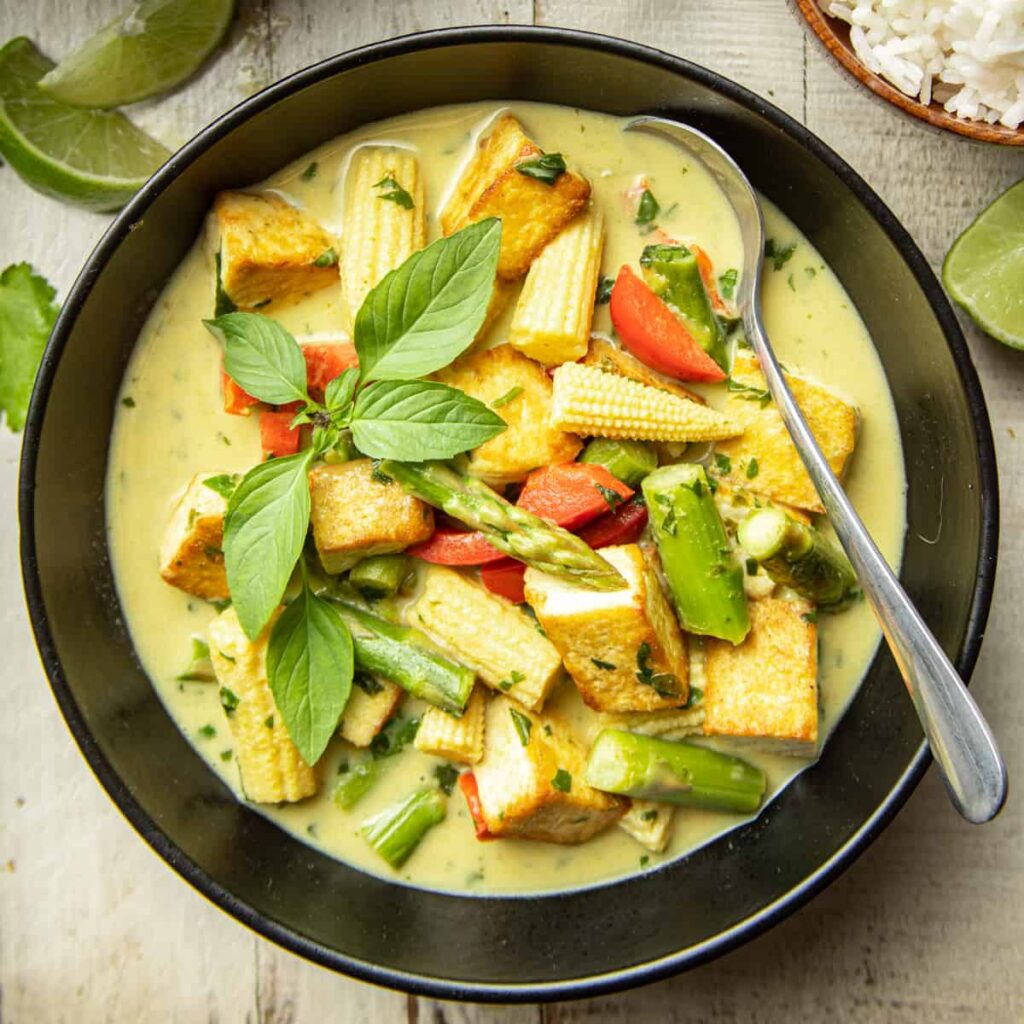
| Vegetarian | Tofu | Use soy sauce instead of fish sauce |
| Modern Fusion | Duck, Salmon, Lamb | Global interpretations |
🎯 The Enduring Legacy of Green Curry
Kaeng Khiao Wan is far more than just food. It is a culinary ambassador for Thailand, a vibrant, complex, and utterly delicious representation of the country’s culture and spirit. It is a dish that tells a story of history, agriculture, and artistry.
To cook it is to partake in a tradition; to eat it is to be transported. We encourage you to embark on your own green curry adventure, to seek out the authentic ingredients, and to experience for yourself the captivating allure of this emerald treasure.